


Exclusive
GLP-1 Weight Loss Drugs Affecting UK Alcohol Sales
The growing uptake of GLP-1 weight-loss medications is triggering shifts across the UK beverage sector. Research from Drinkaware and KAM reveals that GLP-1 weight-loss medications are curbing UK alcohol consumption, driving a 30% drop in spend in pubs and 22% in retail.


Exclusive Interview
Latin America: Balancing Cultural Identity & Innovation
With unparalleled biodiversity and deep-rooted culinary traditions, Latin America is uniquely positioned to lead the next wave of global functional food innovation. Industry expert Stefanía Pérez Beltrán explores how the region is blending ancestral ingredients with modern commercial strategy, balancing cultural authenticity with the growing demand for wellness and sustainability.

Stefanía Pérez Beltrán
Sr. Project Manager NBD | Alianza Team
My name is Stefanía Pérez, I´m a professional in gastronomy and marketing, and I have spent nearly 15 years working across the food and beverage industry in Colombia. Throughout my career, I have had the opportunity to work in mass consumption, food service and food retail, gaining a holistic understanding of how the industry evolves from production to consumer experience.
This journey has allowed me to understand how innovation, gastronomy, marketing and business strategy blend together to create meaningful solutions through products, services, and experiences. I am especially passionate about the connection between culture and food, and how consumer behaviour, heritage and innovation continuously reshape the future of the industry across Latin America.
Latin America is one of the most diverse and dynamic food and beverage regions in the world. Its richness comes from an extraordinary biodiversity of fruits, grains, proteins and native ingredients, combined with the cultural influence of indigenous, African, European and regional traditions that continue shaping consumption today.
What makes the region especially powerful today is the return to its roots. Consumers are increasingly valuing authenticity, heritage and ancestral techniques, transforming indigenous ingredients such as quinoa, native potatoes, cacao, tropical fruits and fermented preparations into globally relevant propositions. This movement is not only culinary, but it is also economic and cultural.
Cultural identity changes how a product is communicated because each market connects with different emotional and cultural values. For example, in Lima, marketing may focus on heritage and premium local ingredients; in Mexico City, on bold flavours and tradition; and in Los Angeles, on wellness, sustainability and multicultural experiences. The product can be the same, but the storytelling and consumer connection must adapt to each culture.
The future of the Latin American food and beverage market is rooted in going back to basics, back to our origins, our crops, our biodiversity and our cultural identity. Latin America has one of the greatest natural and agricultural riches in the world, with an immense diversity of fruits, vegetables, grains, proteins and ancestral ingredients that represent a unique competitive advantage for the global market.
The opportunity ahead is to capitalise on this richness by transforming local products, heritage and authenticity into innovation, economic growth, and sustainable business models. Consumers are increasingly searching for natural, authentic and culturally connected experiences, and Latin America has the power to become a global reference by elevating what has always been part of its essence.
community question
Which consumer demands are driving your R&D?
Have your say in this week’s Community Exchange poll: cast your vote on the core trend steering your current R&D pipeline, from gut-health functional formulations and sugar reduction to novel adaptogens and bold hybrid profiles. Cast your vote to instantly unlock real-time peer insights, track how fellow innovators are prioritising their resources, and see how your development strategy benchmarks against the wider food and beverage landscape.
Select your answers to vote
Results
Option
Option
Option
Option
Option
Option
Option
Option
Option
Option

Switch Energy Drink Launches Limited Edition Bite Me Halloween Flavour
October 14, 2026

Wingstop Launches Sour Patch Kids Flavoured Wings
October 14, 2026

Dunkin' Expands Halloween Lineup with Berry Battie Refresher
October 13, 2026

Pringles Launches Halloween Campaign with Custom Can-Shaped Urn
October 13, 2026
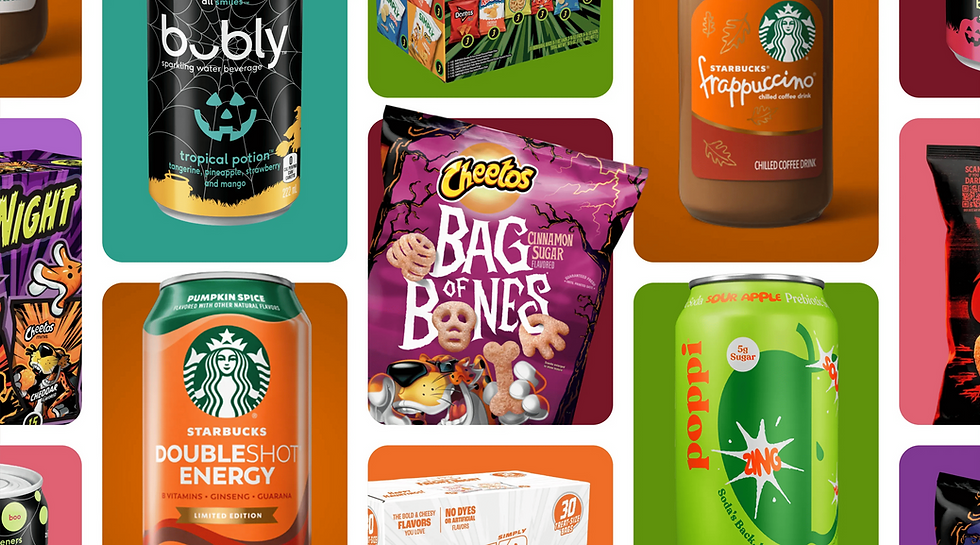
PepsiCo Unveils 2026 Halloween Lineup across Snacks and Beverages
October 13, 2026

Bubly Launches Three Limited Edition Halloween Flavours in Canada
October 11, 2026

Nextdoor and Reese's Team up on Interactive Halloween Treat Map
October 8, 2026

Tropical Smoothie Cafe Launches Fanta Phantom Smoothie
October 7, 2026
TREND WATCH: Autumn 2026
Halloween Trends: Spooky Flavours and Chilling Cold
Spooky confectionery and speciality beverage toppings have transformed Halloween into a retail-wide playground for flavour innovation. Moving far beyond traditional candy corn, modern seasonal menus now leverage craveable textures and visual drama, headlined by the rise of vibrantly tinted, flavoured cold foams cascading over iced brews and trick-or-treat-inspired candy crossovers. Confectioners and beverage developers alike are rethinking nostalgia, blending playful crunch, tart sour coatings, and rich dessert notes into limited-time formats designed for social feeds and impulse grabs.
Textured Candy
Colourful & Flavoured Cold Foam
Descriptive Flavour Profiles
September 2026 Issue
FNBX INSIDER: Redefining Autumnal Culture
In this, our fourth issue, we explore how regulation, severe climate realities, and convenience are fundamentally rewiring our autumnal comforts. Our cover story dives into an evolving seasonal menu that reaches far beyond the predictable pumpkin spice cliché. Driven by changing consumer palates and functional demands, brands are embracing unexpected botanical notes, "swavory" combinations, and multisensory profiles.
-
Autumn Flavour Trends
-
Liquid Concentrates
-
Heat Impacting The Harvest
-
Natural Colours for Candy
